enough
The Brief
Enough aims to reduce plastic waste and carbon emissions by providing low-income urban families with access to nutritious surplus food.
Enough combines a physical store with a digital app offering grocery pick up.
Design Approach
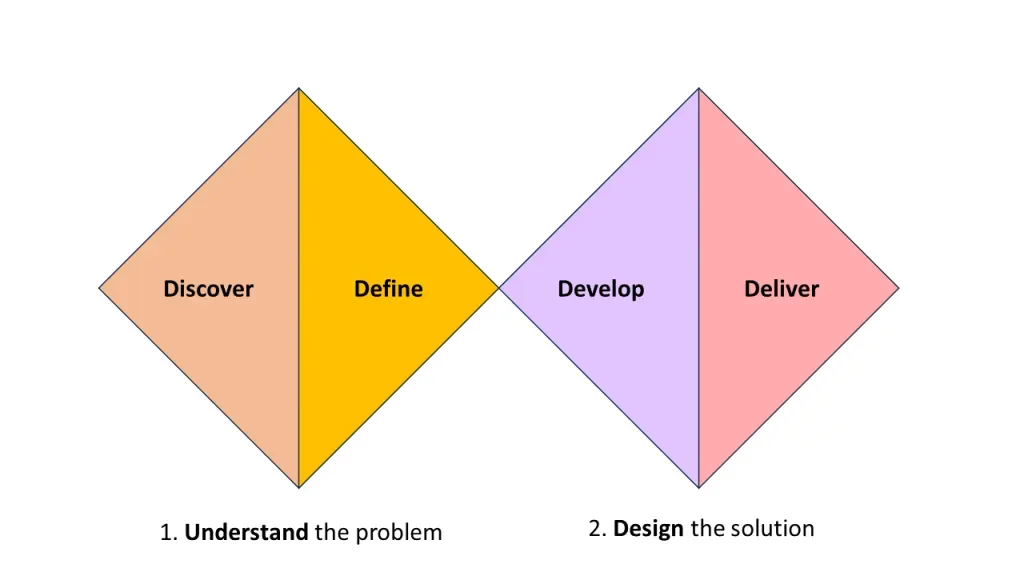
In order to define user needs and develop focused solutions, the Double Dimond model (created by UK Design Council) was used to guide the design process.
The following design work was developed through the four stages of the Double Diamond:
Discover, Define, Develop, Deliver
Stakeholder Interview
In order to identify the key design goals, an interview was held with stakeholder Paul Keaveny.
The interview led to the development of three goals:
Provide easy access to nutritious food.
Make grocery shopping more accessible to underprivileged communities.
Promote sustainability by reducing food waste.
user Interviews
Interviews were conducted with Idia’s Community Kitchen, Salvation Army, Manana Project, and every day budget-conscious shoppers.
The interviews led to the identification of these user needs:
Users need more nutritional education.
A sense of community is essential.
Users face difficulty navigating food access systems and/or apps.
Word of mouth is used to locate food services.
Affordability is key in grocery shopping.
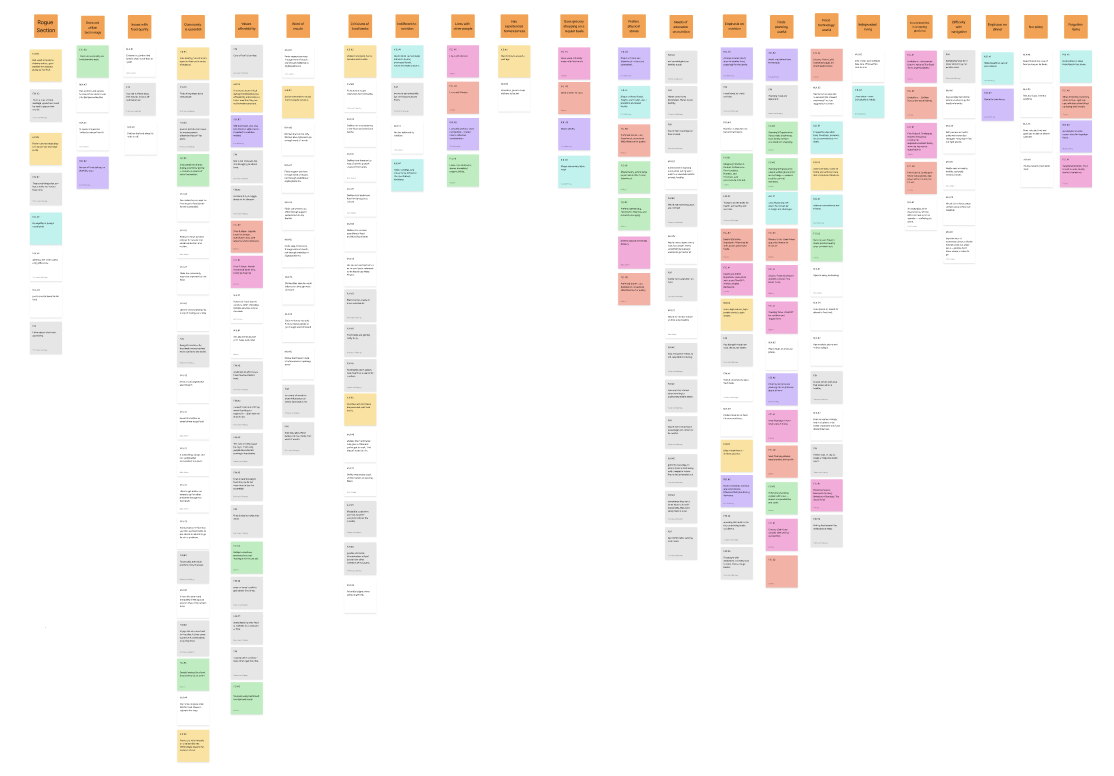
* Notes from user interviews organized using affinity mapping method
user persona
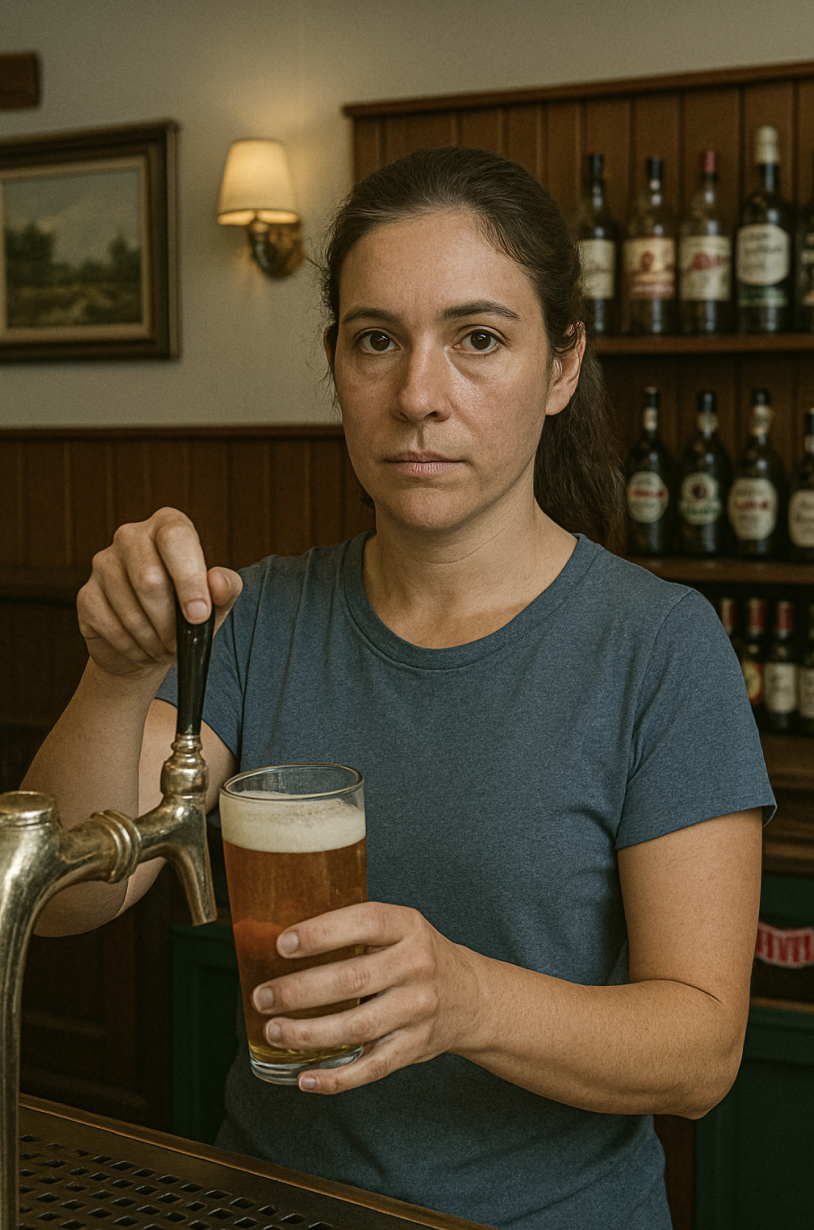
Maria, 45, Bartender
Behaviors
Works long hours.
Struggles to make ends meet.
Struggles to find a balance between working full time and being a single parent.
Goals & Motivations
Spend more quality time with her son, rather than working more hours.
Have the ability to provide her son with nutritious meals on a regular basis.
To create a budget and meal planning system.
Pain Points
Does not know a lot about nutrition, and lacks the time to do extensive research.
Finds healthier food options to be less affordable.
Dislikes the lack of options available at food banks.
How to help Maria
Build a platform that provides easy access to affordable groceries.
Provide effortless access to healthy food and nutritional education.
Offer a sense of community and belonging.
Ideation
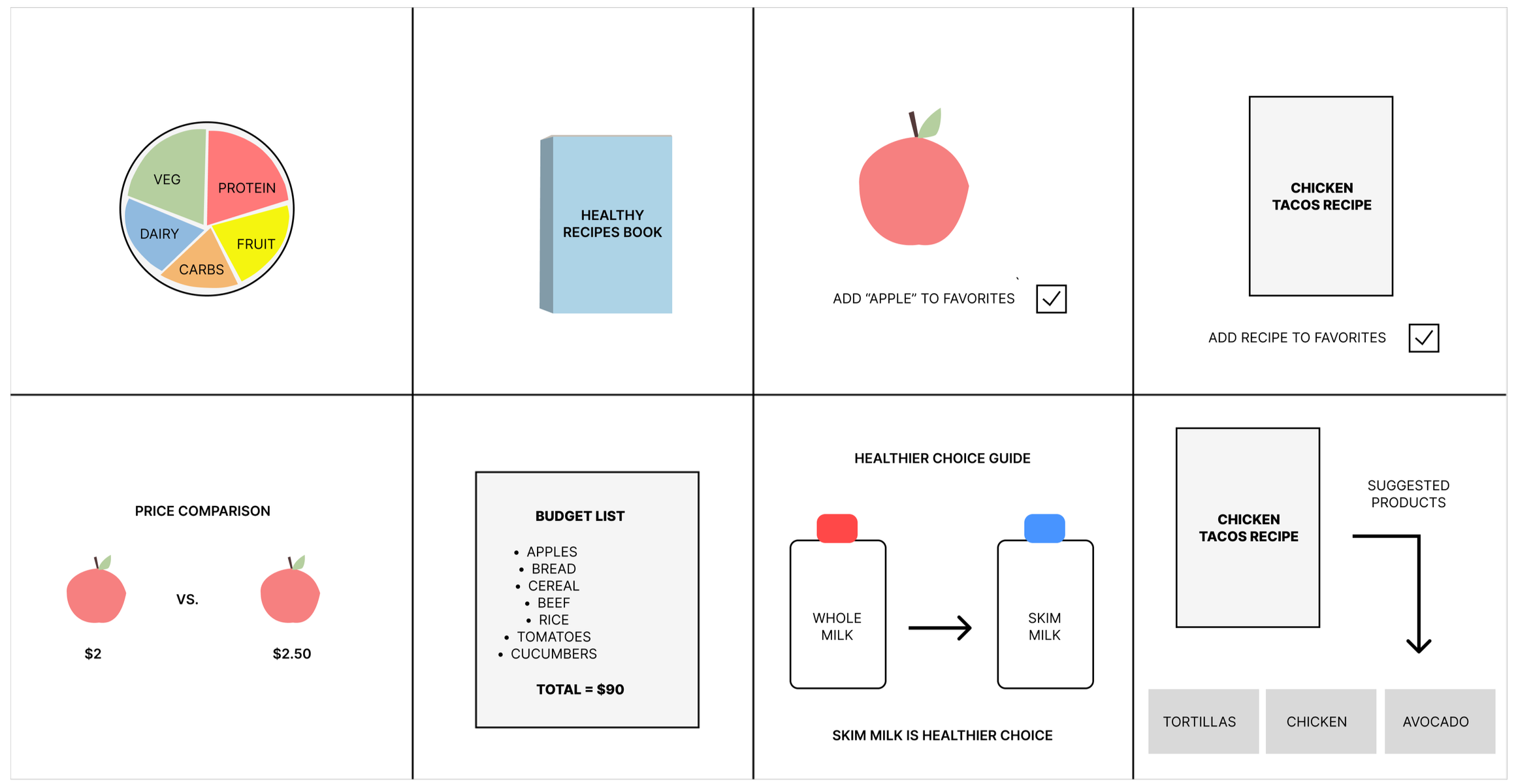
The initial ideation process led to the following ideas:
Nutritious meal education.
Healthy recipe library.
Add products to favorites.
Add recipes to favorites.
Price comparison feature.
Budget list feature.
Healthy choice comparison feature.
Suggested products feature.
Site map
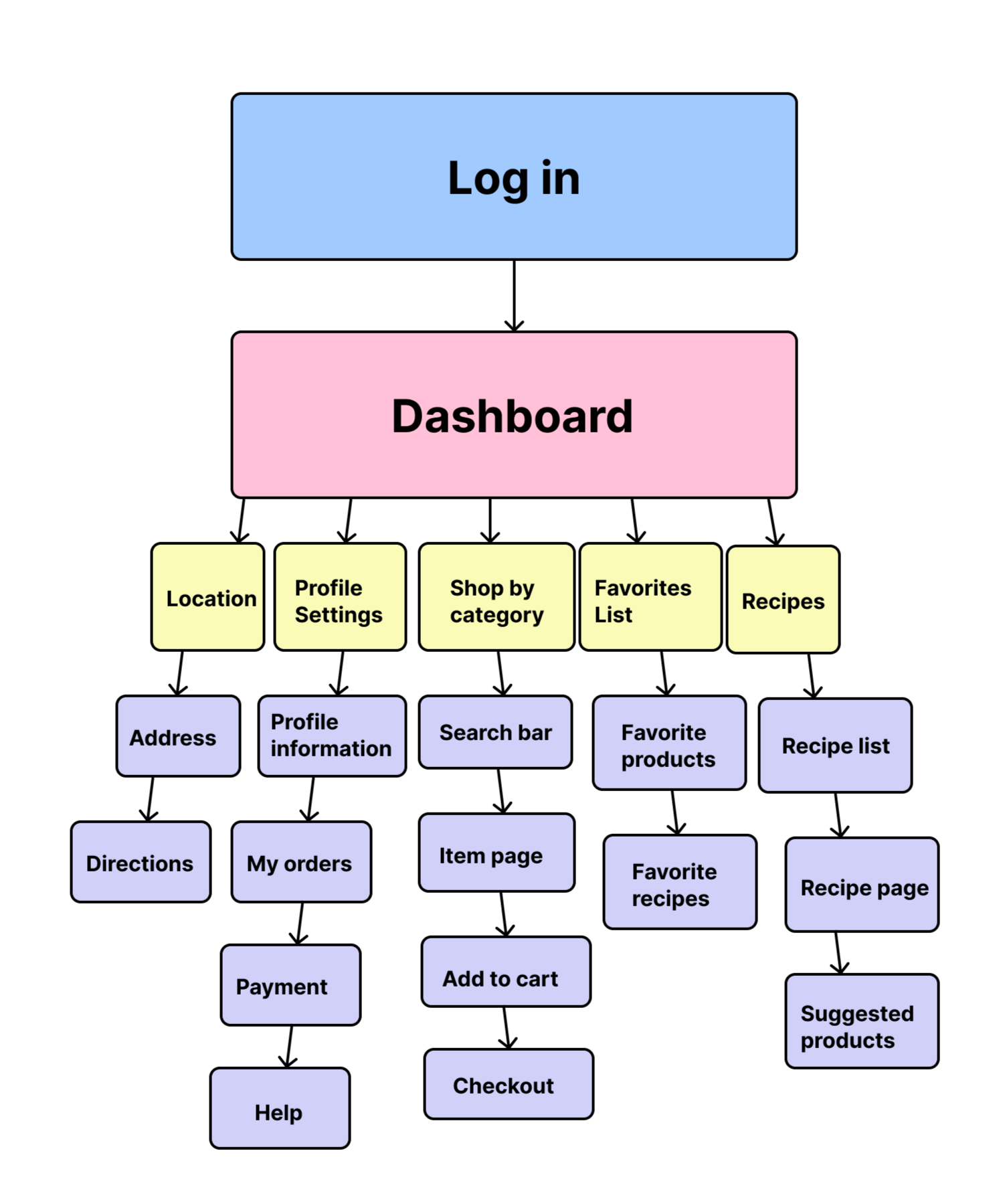
After usability testing a low fidelity prototype, a site map was created to narrow down and add to the list of features included in the design. The following changes to the feature list were changed:
Location information page.
Comparison features were dropped.
Budget list feature dropped.
User flow
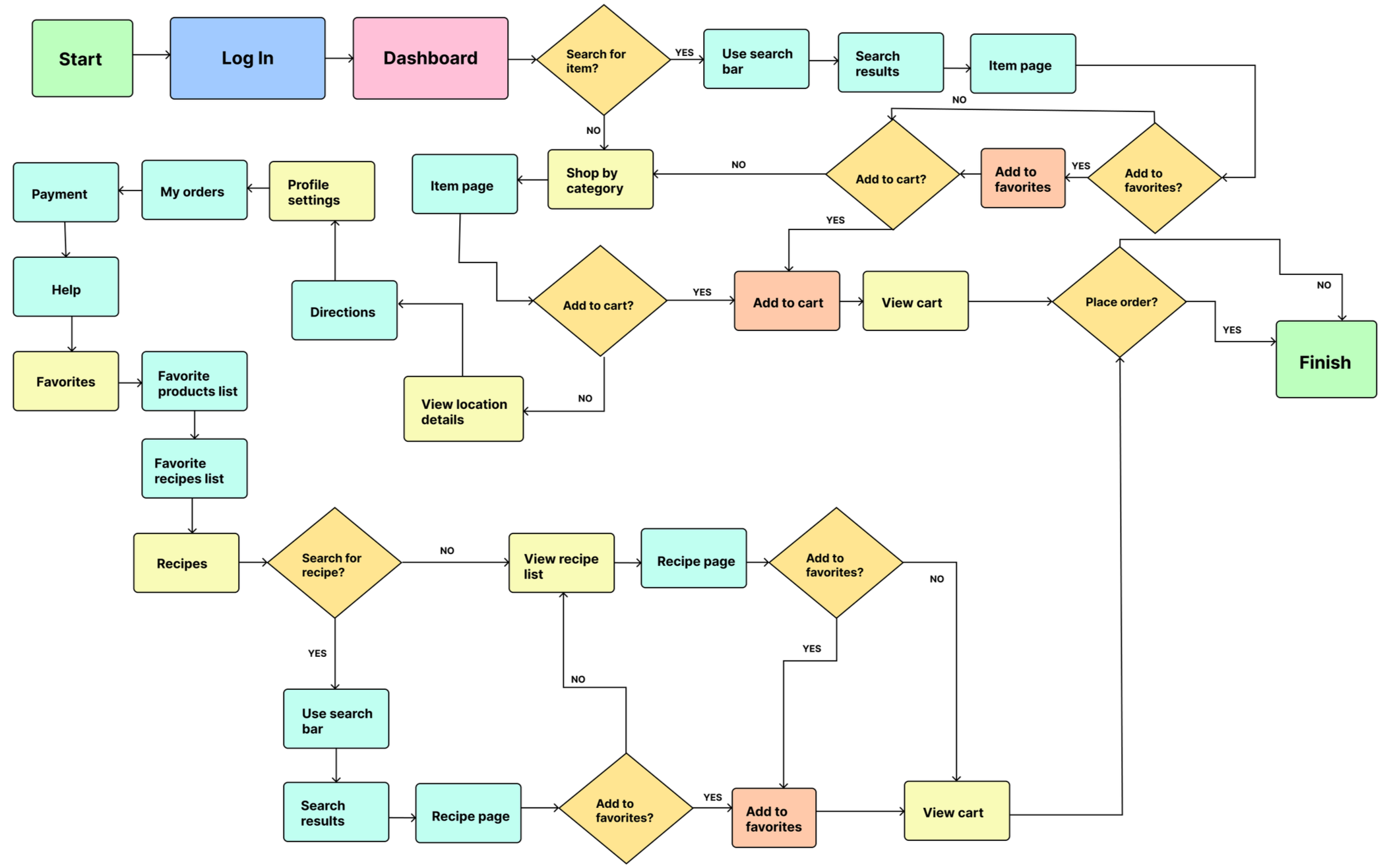
Following the site map, a user flow chart was created to demonstrate a hypothetical user’s journey through the app.
The design
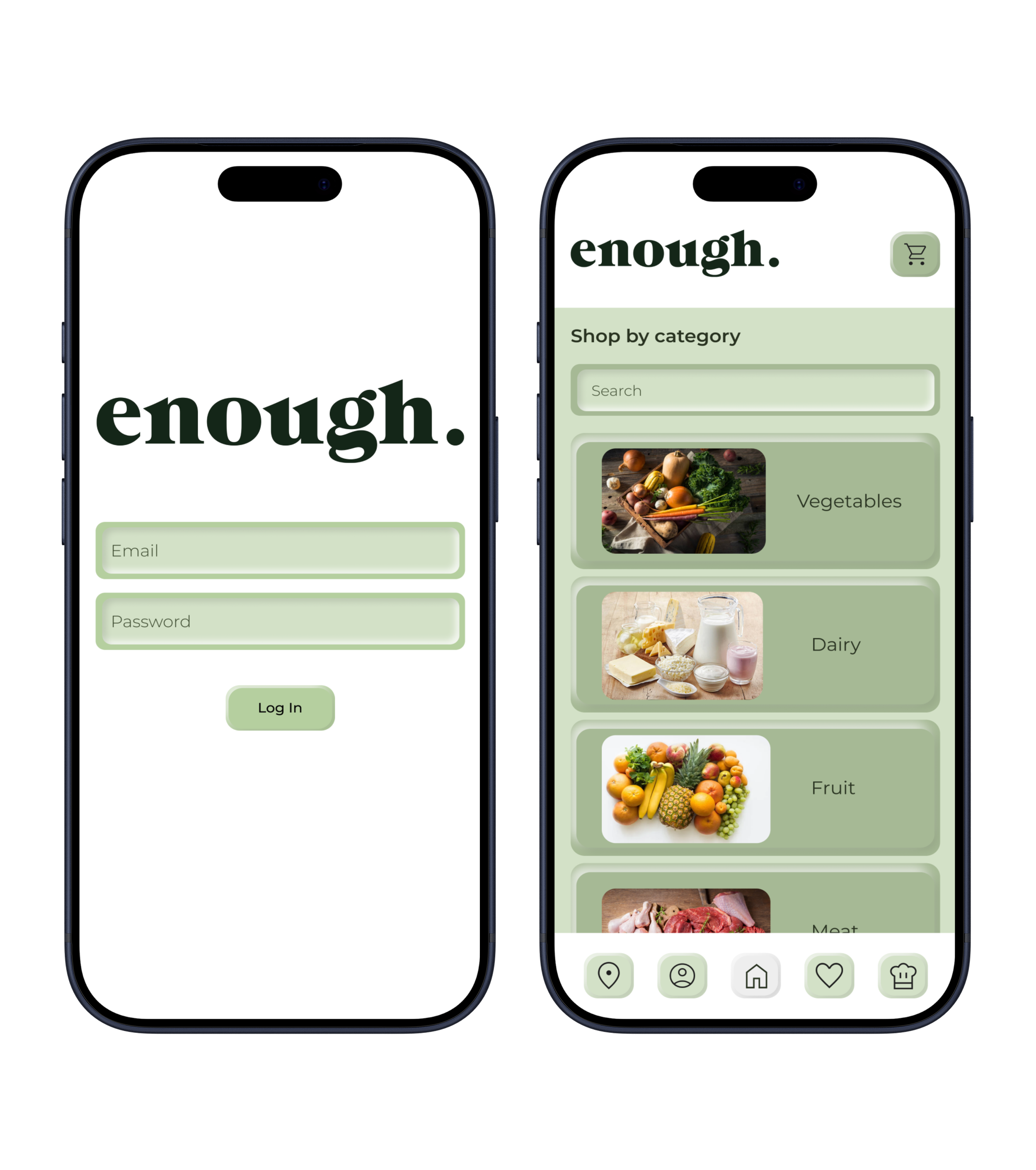
Home
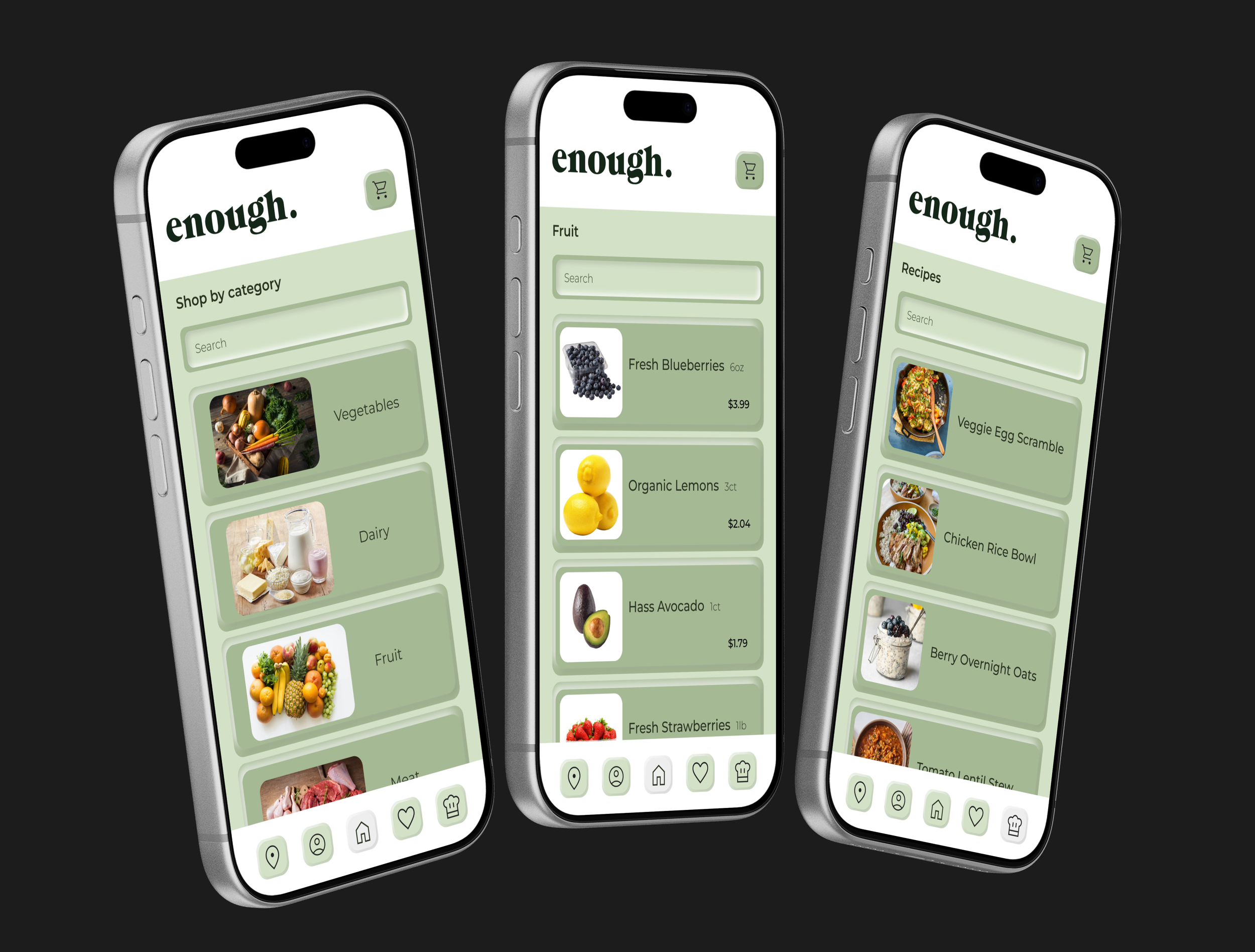
Shop by category homepage.
Search for products using the search bar.
Navigation menu at the bottom.
Shopping cart at the top.
Place an order
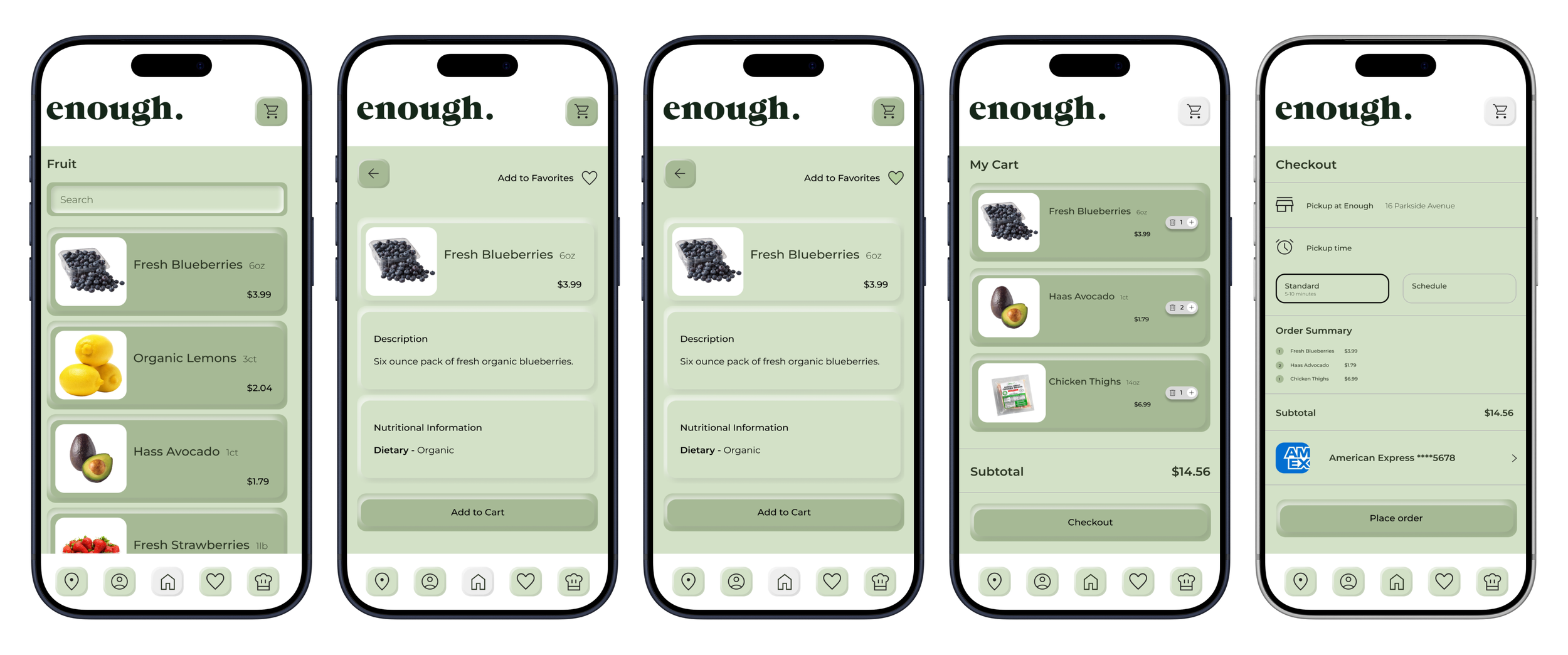
After selecting a category, the user can browse the selection of products,
Once a product is selected, the user will be directed to the product’s page. The product page features a product description, nutritional information, cost, and size.
On the product’s page, you can add the item to your favorites list.
Once the cart is ready, the user will checkout and place the order for pickup at the Enough storefront. The order can be placed for immediate or scheduled pickup.
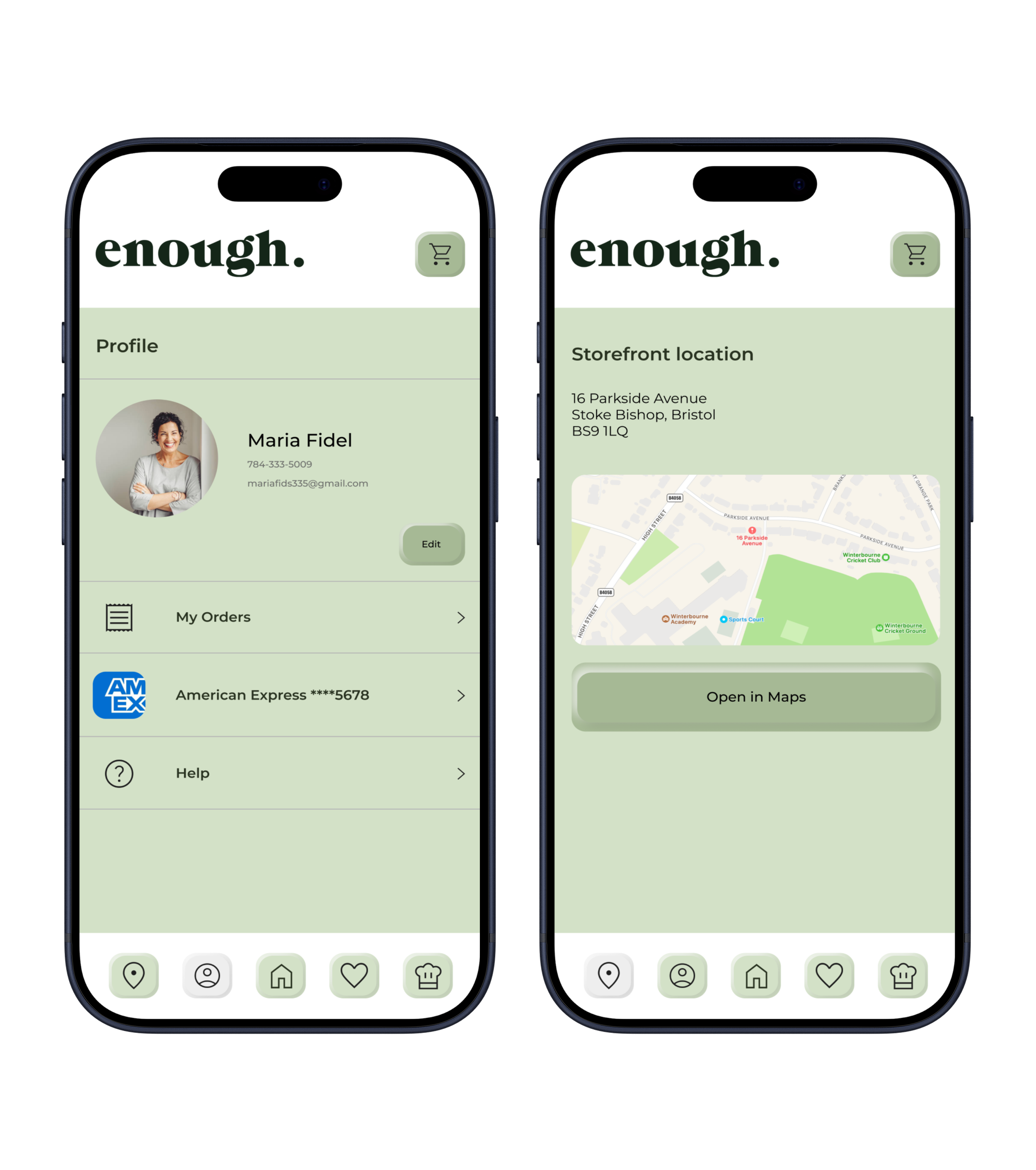
PROFILE SETTINGS + LOCATION
Edit profile and payment information.
View previous orders.
View storefront address.
Get directions to the Enough storefront.
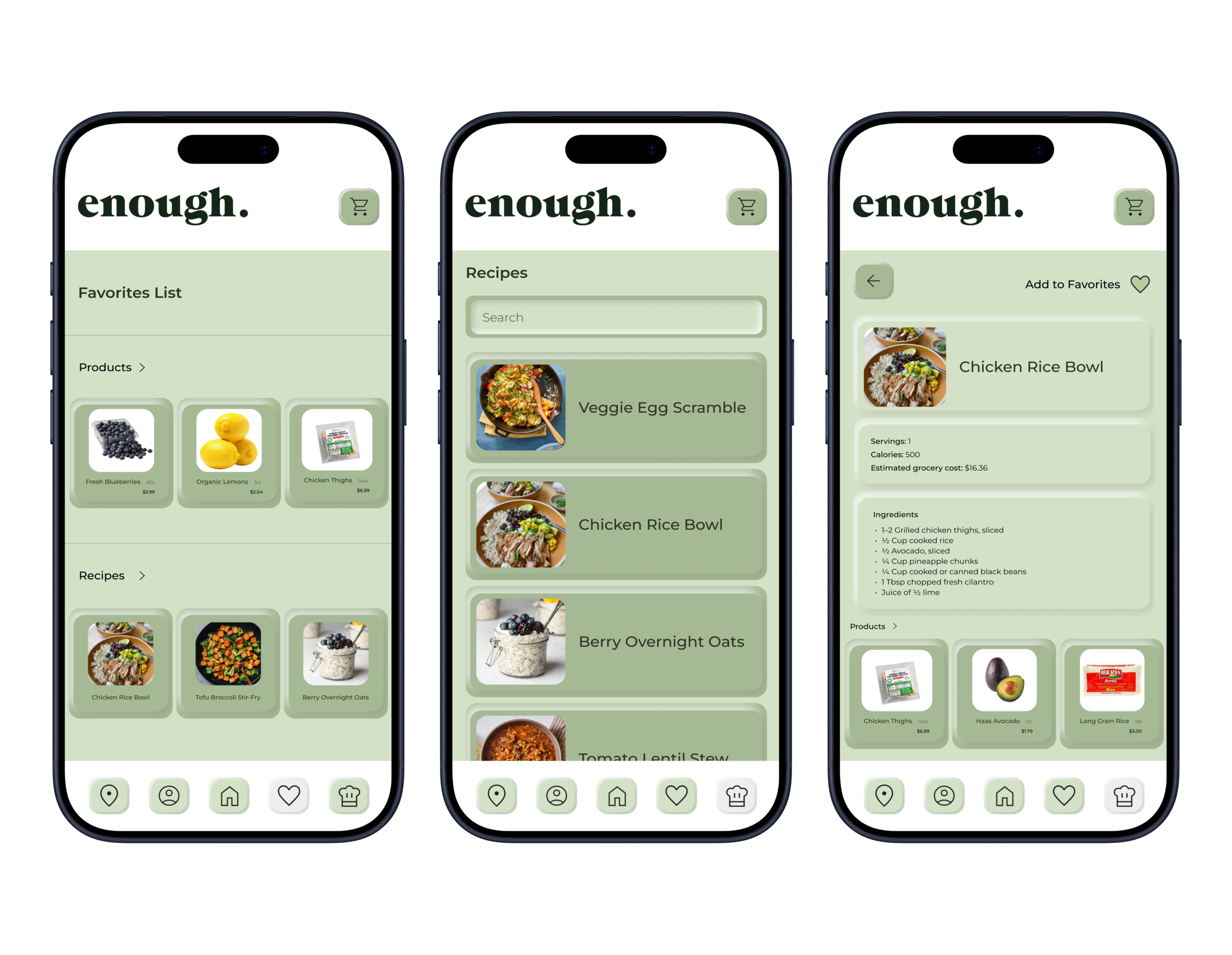
FAVORITES + RECIPES
View favorited products and recipes in your favorites list.
Browse and favorite nutritional recipes.
View suggested products at the bottom of the recipe page.
NEXT PrOJECT